


Towing with a Lifted Truck: A guide

One of the common questions we get goes something like this “Will lifting my truck effect my tow capacity?” or “How tall can I lift my truck and still tow my gooseneck trailer?” or even “What will my tow capacity be after lifting my truck?” Well, to be honest those are all loaded questions that will require digging in for a better understanding of your particular needs. We get these questions most often with 3/4 and 1-ton (aka HD) truck owners, the real workhorses, but the topic comes up with 1/2-ton truck owners, Jeeps and just about anything with a hitch on it. Some of the things you’ll need to answer to point you in the right direction are questions like how big are you wanting to lift your truck, what wheel and tire package are you planning to use and what is the load rating, are you adding other mods (airbag, add-a-leaf, etc.) to help with weight distribution, and what are you trying to tow (trailer type and loaded weight)?
First question, Does lifting a truck affect tow capacity?
Likely yes, but to what extent depends on your setup. The fact of the matter is when lifting your truck you are raising the center of gravity as well as changing the steering and driveline angles. Installing a quality suspension lift like the one we offer here at BDS helps, they come complete, work within factory vehicle parameters and offer great on/offroad performance and handling. When installing larger tires/wheels you are adding more rotating mass to turn/stop. Adding a trailer to the equation piles on more weight and strain.
 Suspension Configuration - One factor includes the configuration of your suspension - are you running a large rear lift block in the back or is there a replacement (taller) leaf spring? Typically the factory leaf springs, especially on HD trucks use a brawny multi-leaf design with integrated overload leaf to ensure plenty of load capacity. Adding a lift block and longer u-bolts is an acceptable way to net additional lift and retain the original spring’s load capacity, but taller lift blocks have the potential to “axle wrap” during heavy torque and hard launches. Adding a traction bar like the BDS Recoil Traction Bars can help control the rear axle for a wide range of driving conditions. With aftermarket leaf springs, they have more arch to achieve the lift without the need for a lift block. These leaf packs are designed to provide on-road comfort, offroad performance and oftentimes have an overload leaf built in for heavier loads. In the case of RAM 2500s with rear coil springs BDS offers a progressive rate coil spring to help provide additional spring rate the more the spring is compressed.
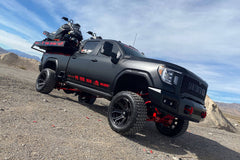 Shocks are another factor. Having a shock designed specifically for your application is critical, but even then the additional load can cause additional forces on the shock and not allow it to perform at their best. Shocks with compression adjustment like the FOX 2.5 Performance Elite (PE) series offer a larger aluminum body with reservoir that features high/low speed compression adjustments allow for increased fluid capacity, easy tunability, and faster cooling regardless of where you’re towing (on/off road).
 Air Bag Kits - One common upgrade to help with load capacity and towing stability are airbag kits for leveling the truck out. Depending on who you talk to, they may refer to them as air helper springs, bag kits, leveling bags; all with the purpose of leveling out the back of the truck when it squats or sags under the load of of a utility trailer, boat, RV/Camper, car hauler, etc. What makes Performance Towing air suspension stand out for a lifted truck (and stock trucks) is the fact that we don't restrict droop travel, allowing the truck to have suspension travel, and we have the blocks for the lifts. The air spring is not restricted by a lower bracket; this is often a complaint of other air suspension kits, where the product may perform well under load, but when it is unloaded and trucks are often used for more than just towing and hauling, it simply doesn't feel stock.
 Tires/Wheels – Your tires are effectively your first point of suspension to absorb bumps in the road while providing traction and supporting the weight of the vehicle. Your vehicles original GVWR is contingent on the tires installed so if going from a 32” tall tire with a E load rating to a 37” tire with a D load rating there will be changes to both the handling of the vehicle due to the large sidewall, but also the lower load rating. Similarly wheels have a load rating, going larger, smaller, or wider than stock will have an effect on vehicle performance and overall load/tow capacity. Smaller wheels and more tire sidewall are great for aired down offroad, but not ideal for towing.
 Gearing – If you are lifting your truck, installing larger wheels/tires and still running the factory gear ratio in the axles this will effect the overall performance as it will throw off the engine RPMs, transmissions shift points and cause more strain on the powertrain. Now we’re not saying it is a requirement to re-gear your truck if you plan to tow and depending on the difference in tire size you may still have acceptable driving/tow performance, but it is a factor to consider. There are several programmers on the market to help adjust shift points as well as tune to regain the perceived loss in engine performance caused by trying to turn the larger wheel/tire mass.
Second Question, Can I still tow my trailer?
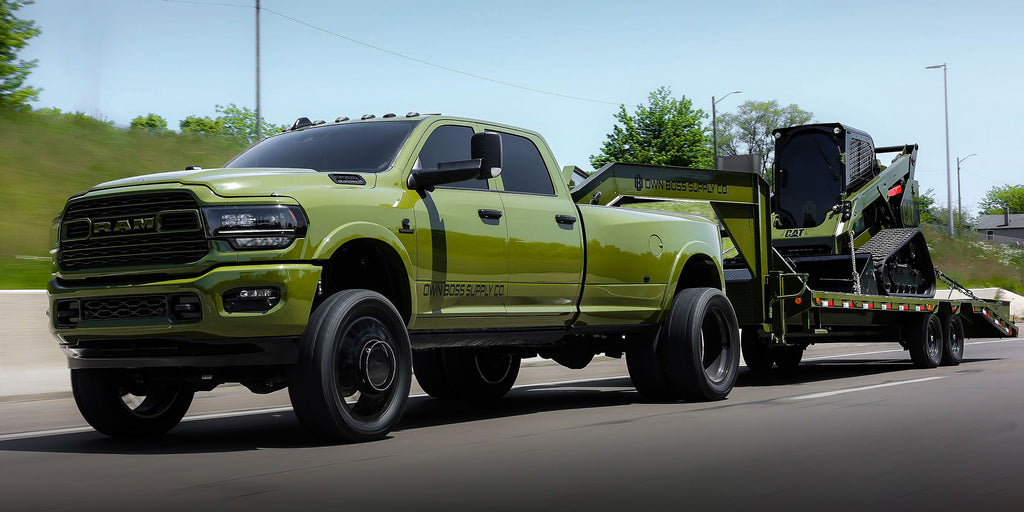
This will depend on your particular situation. Are we talking about a TAG (tow behind), a 5th wheel (in bed) or gooseneck (in bed) trailer? Most trailers can accommodate some additional height from the vehicle towing it, but even that depend on the trailer. For TAG trailers, a drop hitch can be used to effectively tow the trailer. The main limitation you’ll find to lift height is how large of a drop hitch you have and what that hitch is rated for.
As you get into the realm of 5th wheel and gooseneck hitches, vehicle height is more critical as no one wants to take out a tailgate or bedside turning a sharp corner. Some trailers have adjustment to accommodate various hitch heights so there’s a good chance you’ll be able still use it once install a lift on your tow rig, however we suggest taking some measurements first to ensure you have clearance for the additional height from the lift kit and larger tire diameter you plan to install. Other factors will be if it is a tandem or tri-axle as you’ll want to maintain as level as possible of a trailer height.
Frequently Asked Questions
Can you hook a trailer to a lifted truck?
Yes, you can tow with a lifted truck. The key is making sure the lift, hitch setup, and trailer are compatible — a properly rated drop hitch for TAG trailers, and verified bed clearance for 5th wheel and gooseneck setups.
Is it harder to tow with a lifted truck?
Not inherently. The higher center of gravity changes how the truck feels under load, but a quality lift kit paired with application-specific shocks and supporting upgrades like traction bars or air helper springs keeps towing stable and predictable.
Does a 4 inch lift affect towing?
It can. A 4-inch lift changes the truck's geometry, hitch height, and center of gravity, which affects stability and weight distribution. With the right hitch setup and a complete, well-engineered lift kit, most trucks tow confidently at that height.
Why does my lifted truck sag when I tow?
Sag comes from tongue or pin weight compressing the rear suspension — the same as a stock truck, but more noticeable with added ride height. Heavy-duty rear springs or an air bag kit will level the truck back out and restore stability under load.
How much towing capacity do you lose with a lift?
A lift kit doesn't change your truck's manufacturer-rated tow capacity — that rating stays the same. What changes is the practical setup: tire and wheel load ratings, gearing, hitch height, and suspension configuration all affect how well the truck handles that load. Choose components rated for your weights and the truck will tow as intended.